Talking about how much the hotel market has changed sounds like a cliché. Guests know it and so do hoteliers. What really matters now isn't the change itself but how we manage it: what we do with technology, with data and with every interaction to build experiences travellers will remember and want to repeat. Hotel market trends evolve to make guests' lives better and to keep generating sustainable revenue for hoteliers.
In 2026, it's not just about digitalising processes or adding sales channels, but about understanding which trends will make the difference between a hotel that simply provides a bed and one that becomes part of its guests' lives. In 2026, “where to travel” won't be as important as, plainly and simply, “why”.
Time to find out.
Whycations, or the rise of travel with purpose
The concept of Whycations, or travel with purpose, is establishing itself as one of the deepest trends when we talk about traveller behaviour. The question is no longer so much “where am I going?” but “why do I need this trip?”. Real rest, reconnecting with oneself or with others, or the search for something more meaningful than a simple weekend getaway are now what drives the decision. Guests look for coherence between how they live and how they travel, and that changes the rules of the game: the feeling behind the trip weighs more than the destination itself. For hotels, this means that selling rooms isn't enough — you have to communicate values, purposes and experiences that connect transparently with what the traveller is looking for at this stage of their life.
Silence as the new luxury
Something as simple as calm now becomes aspirational. In a world ruled by screens, blue light, the automatic and the instant, silent hospitality, or Hushpitality, is positioning itself as one of the most sought-after services. In fact, 56% of travellers say they plan their trips with one main goal: to rest and recharge, according to the Hilton Trends Report 2026.
Conversational AI, key to managing data and revenue
AI is no longer an experimental tool but a key revenue engine, especially in its conversational form. Digital concierges and chatbots are no longer treated as “an extra” — they're now able to handle up to 80% of the most frequent queries, freeing up the human team for what really adds value: resolving complex complaints, anticipating problems and nurturing the relationship with the customer.
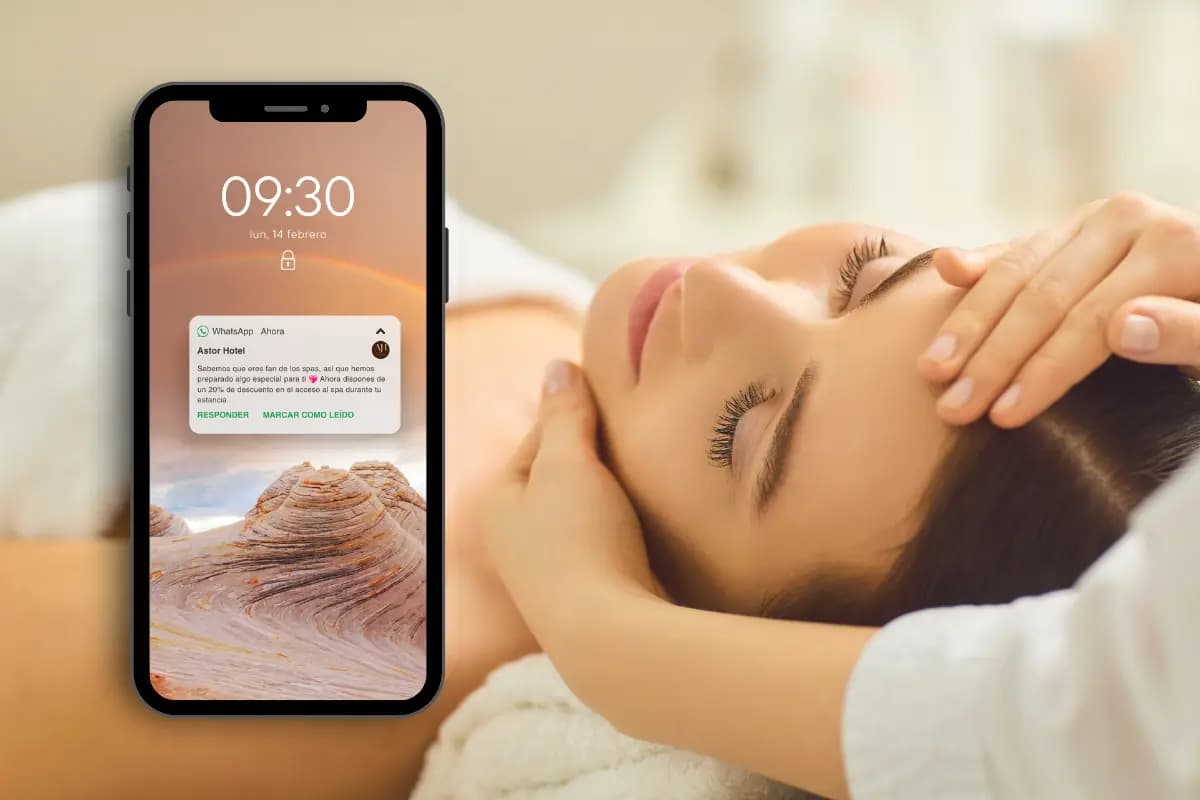
Efficiency is just the tip of the iceberg. These conversational assistants are also a direct lever for revenue. By offering contextual, personalised recommendations at just the right moment, they can boost upselling by up to 250%, according to HotelTechReport. In practice, this means turning every interaction — from a simple question about the spa's opening hours to a late check-out request — into a real opportunity to generate more revenue and improve the experience at the same time.
Going all in on direct sales
Direct sales remain a key piece for protecting hotel profitability. The trend in 2026 centres on controlling distribution technologically. Keeping the same price across all channels is a basic requirement to maintain guests' trust and prevent bookings from happening on intermediated channels.
For hotels, this means investing in tools that automatically flag price disparities, allowing them to react quickly. It's also necessary to optimise the conversion of the official website, reducing steps in the booking process, removing unnecessary friction and creating a smooth experience in which booking direct is the easiest, most logical and most natural option for the guest. And, on top of that, staying present in the guest's mind through owned channels such as email marketing and SMS marketing, using segmented, timely messages that reinforce the relationship and bring the customer back to booking through the direct channel.
Longer stays and “homely” comfort
Today's traveller no longer just asks why to travel — once they've decided, they want to do it for as long as possible. It's not about a weekend getaway that drains your resources and leaves you physically wrecked, but about dedicating time to a passion, a hobby or a personal project. Close to 60% of travellers say they would be willing to disconnect completely to travel for months (or even years), in search of something very specific: room to grow.
This shift pushes hotels towards more residential hospitality models, ones that incorporate “home comforts” — that is, longer stays, more flexible routines and services designed for living, not just for spending the night. This is where elements such as coworking spaces and facilities for combining work and leisure come into play. Make a note: blended travel.
Loyalty in digital form
The loyalty of the future is no longer about racking up points on a card. Now the key is to build relationships. Instead of classic programmes, hotels are looking to build guest communities and offer benefits that feel genuinely valuable day to day.
Technologies such as Web3 and NFTs are a new way to deliver digital memberships that customers can store, transfer and use to access exclusive perks. The ultimate goal is simple: for guests to feel so connected to the brand that choosing to come back feels natural. When between 25% and 30% of business comes from repeat customers, a hotel knows its loyalty strategy is working.
In conclusion: technology is the engine, but the human touch is the fuel
In 2026, hotel success rests on two key elements: human sensitivity and well-used technology. While the traveller looks for purpose, calm and brands they identify with, the hotel needs to maximise revenue and be efficient. That's where AI comes in, acting as one more agent on the team and freeing up everyone else to focus on the human side. The future isn't about choosing between technology and personal touch, but about combining them. The hotels that pull it off will be the ones that win on loyalty and profitability.