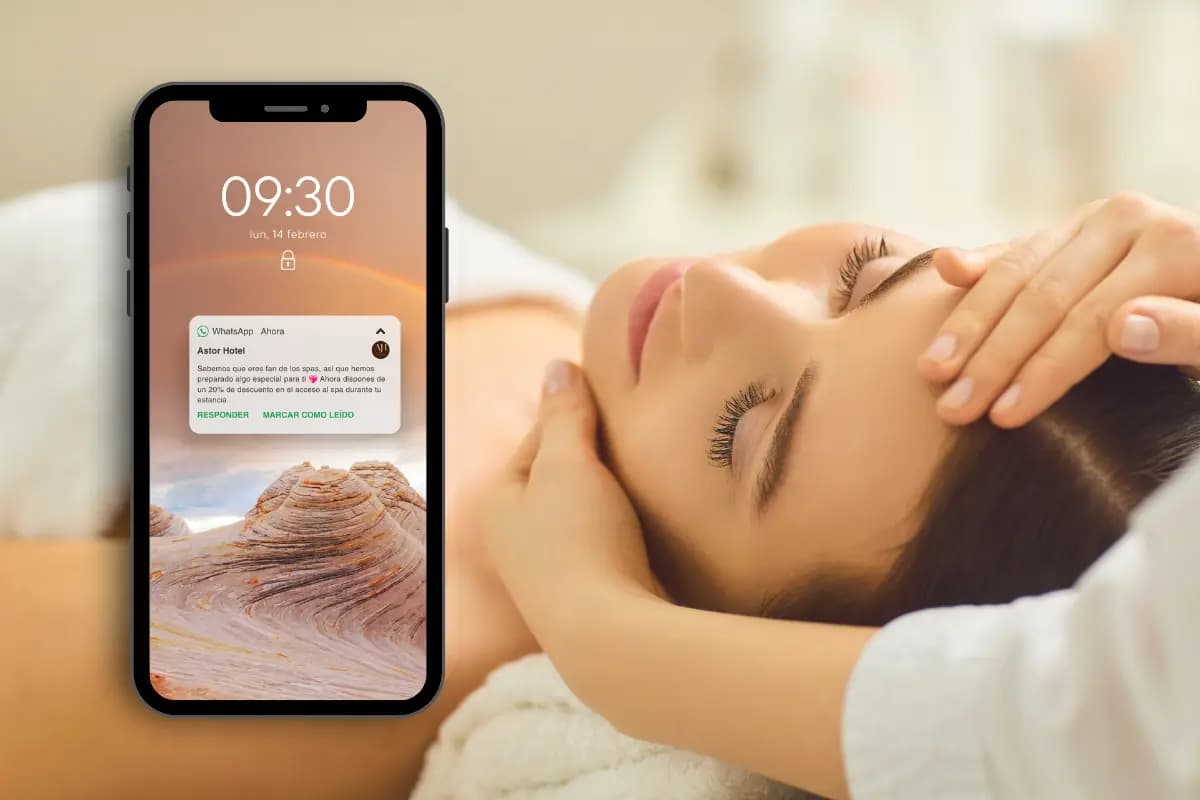
For decades, dependence on OTAs has been an uneven game for hoteliers. While they provide visibility, their commissions, which in 2026 can exceed 30% once you add extra visibility costs and mandatory promotions, erode operating profit dramatically. At Fideltour we have spent almost a decade helping hotels improve their direct sales, and more and more organic tools are emerging that help hoteliers depend more on themselves and less on commissioned third parties.
The maturing of generative AI and genuinely multichannel strategies are allowing hotels to recover not only their margin, but also ownership of the guest relationship, thanks to actions and strategies that are increasingly easy to implement and ever more effective.
From SEO to GEO: the new generative tool
It is no longer just about competing for visibility and clicks within Google's top four results. The arrival of AI Overviews (AI-generated summaries), which already appear in more than 13% of travel searches, has given rise to GEO (Generative Engine Optimization), an evolution of SEO whose goal is to get AI to extract your information in order to give the user a direct answer. Where SEO ranks, GEO analyses and extracts relevant information.
To speak what many already call the "language of AI", the technical structure is non-negotiable. Generative engines prioritise the architecture of specific structured data (Schema.org) and the implementation of specific tags such as Hotel, HotelRoom and, above all, FAQPage, allowing AI to "connect the dots" between your brand and the traveller's needs.
So, how should information be structured for AI?
- Replace keywords with intent scenarios: Instead of optimising only for "luxury hotel in Madrid", the hotel must respond to complex prompts such as: "I'm looking for a hotel with natural light to work remotely, quiet and with quick access to the metro". Think about how you, as a user, would carry out a search organically.
- Extreme specificity in descriptors: AI ignores generic adjectives ("bright rooms"). It prefers factual data such as "25-metre infinity pool with an underwater music system" or "Charging stations for electric vehicles (EV) available for guests". The reality is that your hotel and its description must stand out; your potential guests want detail. So does AI.
- The 40–60 rule: For AI to cite your website, the answers in your frequently asked questions (FAQ) sections should be between 40 and 60 words long. This length allows language models to extract the answer cleanly and directly.
GEO does not replace SEO, it extends it. SEO remains essential to ensure that a website is crawlable, fast, well structured and visible in traditional search results. GEO, on the other hand, focuses on optimising content so that artificial intelligence engines can interpret it, extract it and use it as a direct answer in generative environments.
Short-format content and WhatsApp, a key funnel for conversion and guest relationships
Effective multichannel strategy in 2026 means building a sound communication structure so that all the key touchpoints connect at the right moment and with the right guest.
Social media, website and email marketing, the foundation of the relationship
The modern sales process begins on networks such as TikTok or Instagram, which act as visual search engines for the new generations. Here, UGC content, influencer marketing and the hotel's own social content strategy are the "gateway" to generating desire. Even so, it is worth remembering that the sale should not be forced on social media; here the goal is to drive that traffic to the official website, where email marketing takes over to build a valuable relationship. By capturing first-party data from the outset, the hotelier can activate nurturing campaigns that encourage direct bookings without paying tolls to third parties.
The bridge to the booking
Once the bond created by email marketing culminates in a confirmed booking, the hotel must pivot its strategy: the goal is no longer to convince the user to choose the property, but to ensure that every interaction before their arrival is flawless, removing any possible friction from the guest journey.
Direct messaging; the heart of the stay
The use of WhatsApp and SMS is reserved exclusively for the active booking and stay phase. This channel is a tool for hospitality and immediacy. Once the stay is confirmed, these channels are activated at critical moments: instant confirmation, useful pre-stay information (weather, transport, preferences) and real-time support during the stay for service requests or resolving queries.
It is hugely important to understand that not all strategies are the same, and that not all travellers need or want the same thing. So, as we study the guest journey, each segment can have its own empathy map. This map helps us identify different situations and propose the most appropriate solutions for each type of guest in different circumstances. It is neither simple nor quick work, but it is a very useful tool for getting to know the guest beyond the booking.
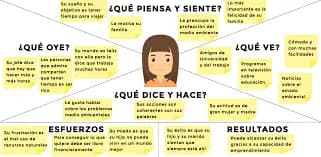
Empathy map from anaivars.com
The definitive leap towards disintermediation
The true qualitative leap towards disintermediation occurs when we are able to identify the "invisible guest": that user who browses our website, compares options and leaves without any apparent trace. To capture this silent intent, CDP (Customer Data Platform) technology has become indispensable, as it makes it possible to monitor the behaviour of anonymous visitors and unify data from multiple digital sources.
This ability to turn anonymous data into actionable knowledge is what makes it possible to understand the traveller's true intent even before knowing their name, transforming the coldness of a website visit into a hyper-personalised acquisition opportunity that boosts the direct conversion rate.
The conclusion: an intelligent combination of tools
This strategy redefines the hotel sales funnel by turning visual inspiration into a direct, personalised transaction. By centralising channels on a single platform, the hotel removes the noise between marketing and sales, making it possible to act on purchase intent at exactly the right moment and to ensure post-booking service in a high-trust environment, thereby optimising the operating margin.