
In this thoroughly digital era we live in, online reputation has become the diamond of any business. For hotels it is the direct reflection of how their prestige is perceived online and, unlike other aspects, it isn't under the brand's total control, but rather that of the users who share their opinions and experiences. Whether you're new or have been in the business for decades, actively managing your online reputation is essential if you want to grow your customer base and stay competitive.
Why is hotels' online reputation so important?
When a traveller decides where to stay, multiple factors influence their choice. Elements such as the hotel's image, its category and, of course, its price, carry significant weight. However, one of the most decisive factors today is the rating from previous travellers and their comments about their stays.
According to a study by Expedia, travellers choose a hotel first by its nightly rate and, secondly, by its position in the rankings of online review portals. Other data reveals that 74% of consumers run a Google search before making a decision, and 64% check reviews and ratings before completing a purchase. 90% trust recommendations from friends, while 78% trust the opinions of strangers online, compared with just 16% who trust traditional advertising.
These numbers highlight the relevance of online reputation as a fundamental pillar in any hotel marketing strategy.
The relationship between your online reputation and your brand
A good online reputation not only builds trust, it also boosts any digital marketing strategy you implement. According to a Havas report, consumers wouldn't mind if 77% of the brands that currently exist disappeared. This means that, in an environment where users are in control, you must strive to turn your hotel into an indispensable brand. Harvard Business Review's research reinforces this idea: only the brands that maintain their authenticity and essence will endure in the long term.
In hospitality, this translates into maintaining a solid reputation built on the real, positive experiences of your guests.
The Guest Journey and its impact on and relationship with online reputation
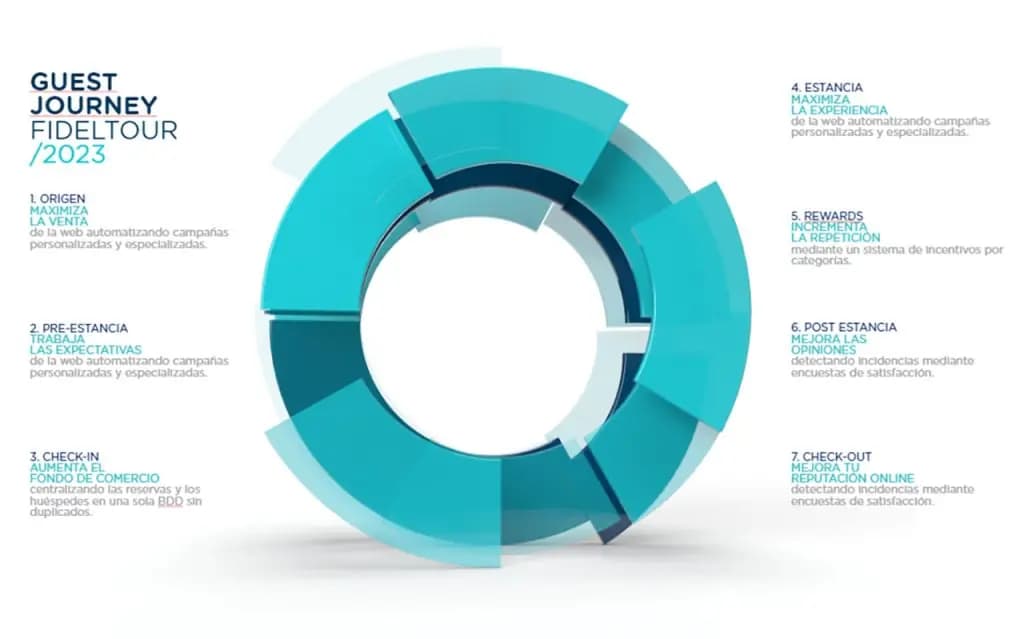
The Guest Journey Map describes the complete cycle a customer goes through when interacting with your hotel, and it is made up of four main phases: Origin, Pre-stay, Stay and Post-stay. Each of these stages is influenced by the establishment's online reputation, affecting both the guest's initial perception and their final decision to book.
-
Pre-stay: During the search and booking phase, the traveller faces a key decision: which hotel to stay at? One of the determining factors is trust in the brand, driven by online reviews. The traveller will research opinions on portals such as TripAdvisor, Google Reviews or the OTAs, looking not only at the overall ratings but also at the number of negative or positive opinions. Booking decisions —whether through a direct or intermediated channel— will be influenced by this research phase. That's why having a solid online presence and actively managing reviews can make the difference between being chosen or discarded.
-
Stay: The traveller's expectations will be directly influenced by the opinions they read before arriving. In this phase, it's crucial that the hotel maintains proactive communication with the guest to ensure their experience lives up to what was expected. According to studies published by Hosteltur, more than 90% of guests prefer to express their dissatisfaction during their stay, rather than waiting until after they've left the hotel. For this reason, implementing on-site satisfaction surveys and resolving problems immediately can prevent later negative comments. If problems aren't detected in time, the guest's dissatisfaction could turn into a public review that affects the hotel's future perception.
-
Post-stay: Once the guest leaves, it's crucial to keep communicating to encourage them to leave a positive review. The opinions they share after their stay will not only influence future bookings, but will also strengthen your position in the rankings of OTAs and search engines. Remember, a dissatisfied customer will always make their complaint public, while a satisfied one must be incentivised to share their experience. Using tools such as surveys and follow-up messages helps motivate happy guests to leave their reviews, thereby improving your online reputation.
How to improve a hotel's online reputation
Communicate with your customer
Keep an open line of communication throughout the stay and afterwards. Learn their opinions and work on improving the expectations of future guests.
Monitor what they say about you
Use tools such as the Fideltour Reviews module to stay on top of what's being said about your hotel and respond quickly to any negative comment. Response speed is key to avoiding a reputation crisis.
Use negative reviews to improve your attention to detail
Don't fall into the temptation of aggressively denying a negative comment. Instead, respond with empathy and look for solutions, showing that you value the guest's experience.
Carry out surveys and audits of your service
Proactive surveys sent directly to guests not only generate more positive comments, they also allow you to continuously improve.
More reviews, better positioning
The volume of reviews also influences your hotel's positioning. The more positive opinions, the greater your visibility in search engines and OTAs.
In conclusion
Online reputation doesn't only depend on customers' comments, but on how you manage that information to continuously improve your guests' experience. With Fideltour's hotel survey module, you can obtain valuable insights to improve your customers' stay and maintain a solid reputation.